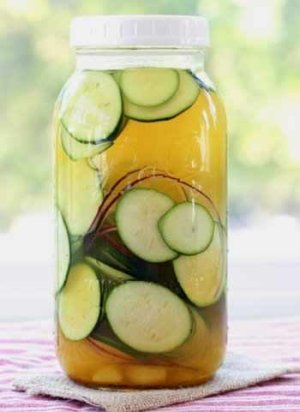
 Lacto-Fermenation is one of the oldest food preservation methods still regularly used. It is not Witchcraft or Sorcery and it's effective tasty and pretty much bullet proof. If it tastes good, then it's good. Plus the resultant pickles have the benefit of home made probiotics. Lacto-Fermentation has nothing to do with dairy products, the lacto refers to lactic acid. All fruits and vegetables have beneficial bacteria such as Lactobacillus on the surface. In an anaerobic (oxygen-free) environment, these bacteria convert sugars into lactic acid, which inhibits harmful bacteria and acts as a preservative. It's also what gives fermented foods their characteristic sour flavour. The earliest record of fermentation dates back as far as 6000 B.C. in the Fertile Crescent -and nearly every civilization since has included at least one fermented food in its culinary heritage. From Korean kimchi and Indian chutneys to the ubiquitous sauerkraut.
 We often “Raid” the fridge at our local Polish Deli. They generally have a wide selection of cured and smoked Pork Sausages. Don't worry about not being able to read Polish, they are pretty self explanatory.
Ingredients:-
Pasta. We used Fusilli but it really doesn't matter which shape you choose.
Salami, sliced or chopped
I large Onion, chopped
2 cloves of Garlic, grated
Onion Salt
Paprika
Chilli flakes
Red and yellow Peppers, sliced
Cheese Sauce (Margarine or butter, Milk, Flour)
Italian style grated Cheese
Mushrooms, sliced
Cheddar Cheese, grated
Mixed Chilli, sliced
Parsley to garnish. (Not essential, but why not if you have some?)
Method:-
(1) Fry the Onion, Peppers, Mushrooms, Garlic, Paprika, Chilli flakes.
(2) Season with Salt, Pepper and Onion Salt.
(3) Add the Salami
Cheese Sauce:-
(1) Melt the margarine or butter in a pan.
(2) Add the Flour and mix over a low heat into you have a smooth paste.
(3) Gradually add the Milk a little at a time mixing constantly, until you have a runny constancy.
(4) Season with a little Salt and Pepper.
(5) Add the grated Cheese and mix thoroughly so you end up with a smooth sauce.
(6) Add extra milk if the sauce is too stiff and mix thoroughly.
Bringing everything together:-
(1) Boil the Pasta until tender.
(2) Add the fried ingredients to the Cheese Sauce.
(3) Add the sauce to the drained Pasta and mix through.
(4) Garnish with Italian style grated Cheese and a sprig of Parsley.
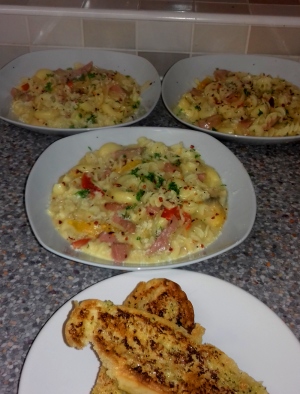
We served ours with home made Garlic Bread.


